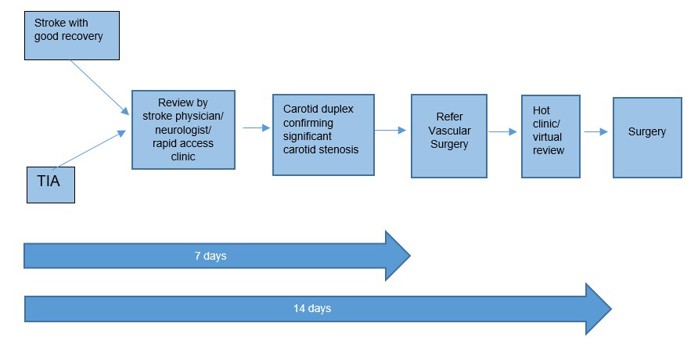
Following initial referral/ presentation, patients will be reviewed by specialist physicians (stroke physicians, neurologists or general physicians). Patients will have optimisation of medical conditions including metabolic syndrome, hypertension, diabetes and hypercholesterolaemia along with being commenced on secondary preventative medication. The patients will undergo imaging to confirm evidence of carotid disease; carotid duplex, computed tomography (CT) angiography or magnetic resonance (MR) angiography. Carotid disease should be confirmed on either 2 imaging modalities (types) or 2 carotid duplex ultrasound scans performed by separate vascular technicians.
Patients who are potentially suitable for surgery should be referred urgently to the vascular service if the imaging reveals the following:
- 50% to 99% stenosis according to the North American Symptomatic Carotid Endarterectomy Trial (NASCET) criteria, or
- 70% to 99% according to the European Carotid Surgery Trial (ESCT) criteria.
The methods of referral may vary between individual vascular services (electronic mailbox/ on call team) but the priority is for urgent review and intervention.
On receipt of the referral, patients should be considered immediately for Carotid Endarterectomy if appropriate. Adverse factors include poor recovery following index cerebrovascular event, significant co-morbidity, poor level of function or patient preference.
Patients can be reviewed via urgent outpatient clinics, hot clinics, or telephone consultation as long as surgery, if appropriate, is not delayed. Consideration should be given to a Multidisciplinary Team Meeting (MDT) although this should not delay intervention.
The benefits and risks of carotid surgery vary depending on a number of factors, including degree of stenosis and gender of the patient. The decision to proceed with surgery should involve shared decision making with a fully informed patient. The use of a validated stroke risk calculator tool may help in this regard e.g. Oxford Carotid Stenosis Tool3


 Vascular surgery