Alcohol Withdrawal Management using the Glasgow Modified Alcohol Withdrawal Scale (GMAWS) for inpatients in NHS Borders General Hospital

Warning

Objectives

EXCLUSION: This guideline is not to be used for patients being admitted electively to Huntlyburn ward for alcohol detoxification under the care of the Borders Addiction Service (BAS), there is a separate guideline document for this group.

This guideline is intended to assist staff in the management of patients who experience alcohol withdrawal in the inpatient setting.

  1. To manage withdrawal symptoms.
  2. To identify those at high risk of significant complications of alcohol withdrawal.
  3. To reduce the incidence of and manage complications including seizures, delirium tremens (DT’s) and Wernicke’s encephalopathy (WE).

Clinical judgement should always be exercised on the applicability of any guideline, influenced by individual patient characteristics. If, after discussion with the patient or carer, there are good reasons for not following a guideline, it is good practice to record these and communicate them to others involved in the care of the patient.

Recognition

Alcohol withdrawal can be associated with significant morbidity and even mortality if improperly managed. Alcohol withdrawal may be the presenting feature or may occur as an unexplained development in a patient who has been admitted for other reasons. The symptoms may start within a few hours of cessation or significant reduction of alcohol use, though can emerge in the days following and so become apparent after the initial admission. These generally peak between 24-48 hours and begin to subside by 60-72 hours.

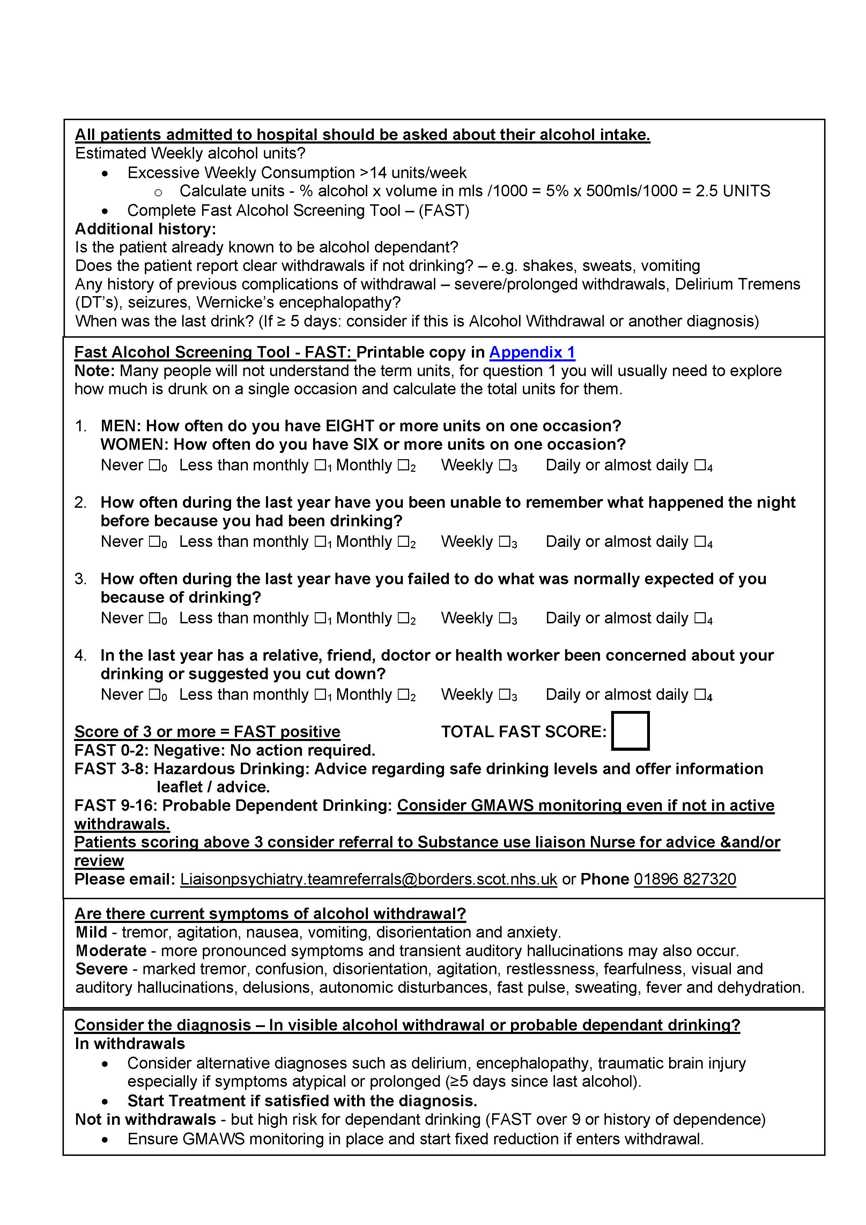
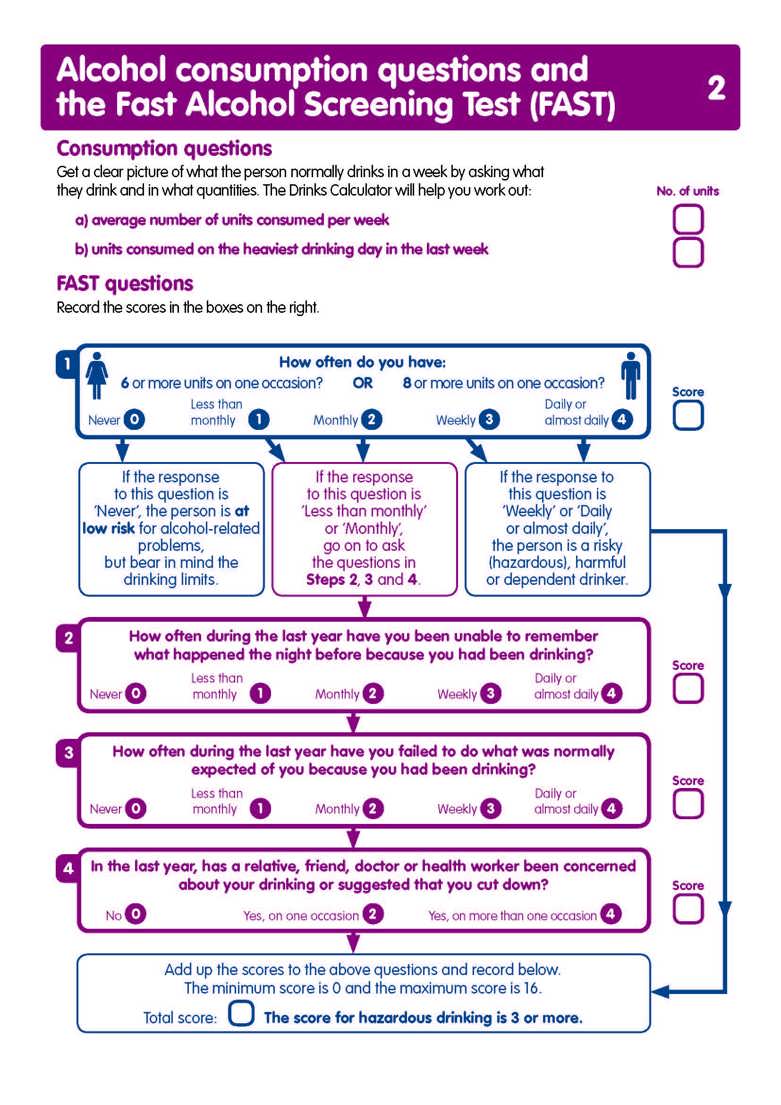
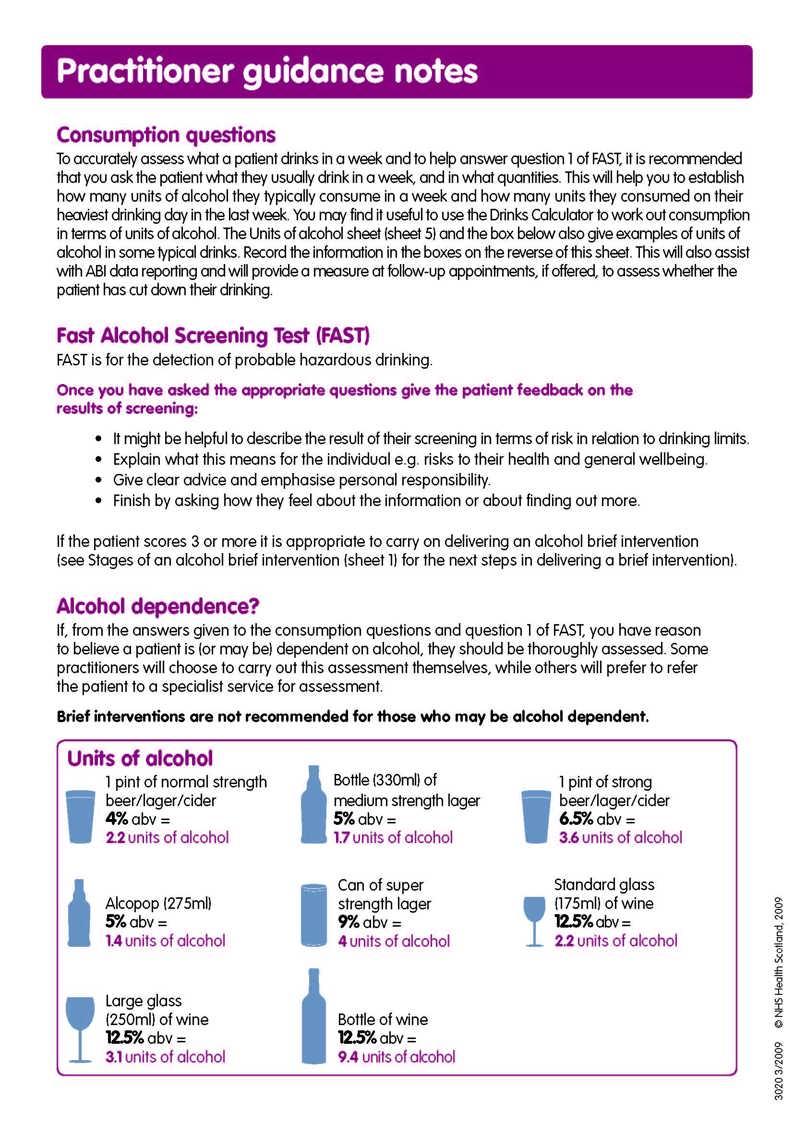
All patients admitted to hospital should be asked about their alcohol intake and if using over 14 units a week or there are any concerns around harmful use of alcohol should be screened using the Fast Alcohol Screening Tool (FAST) see Appendix 1. Those scoring 9 or over on FAST should be viewed as likely to be dependently drinking and at risk of entering withdrawals.

Symptoms of Alcohol Withdrawal include:

  • Cravings for alcohol
  • Mood changes - depression, anxiety, irritability, agitation
  • Restlessness, insomnia
  • Sweating
  • Tremor (range from fingers to whole body)
  • Nausea +/- vomiting
  • Confusion / disorientation (fluctuating intensity)
  • Hallucinations (tactile, auditory, visual; may be fleeting)

Assessment

Guidance around Patients requesting unplanned admission for alcohol detoxification.

Outside of specific programs that can offer a high level of immediate assertive supports there is no evidence that unplanned admission for alcohol detoxification is likely to lead to sustained abstinence.

Patients presenting to the BGH ED acutely requesting alcohol detoxification should be assessed. If there is no other medical cause for admission, then they should be seen by the Substance Use Liaison Nurse if they are available or if not then referred by ED to ‘With You’ (previously Addaction) for community follow up link to referral form Tel: 01896 757843 or Freephone 0800 028 6664. They should not be admitted for unplanned detox unless they are in a degree of advanced withdrawals that would mean it is unsafe to send them home.

Advice should be given around the risk of abruptly stopping alcohol (seizure, complex withdrawal) and they should be given advice to continue drinking and to seek support from With You to be supported to begin to reduce and plan towards elective alcohol detoxification if this is indicated.

If advising patients about continued drinking on discharge, give clear information on reducing consumption rather than stopping abruptly because of risk of withdrawals.

Assessment Process

Assessment should include history and examination to establish:

  • The presence and severity of alcohol dependence
    • Presence of active withdrawals (use GMAWS in Appendix 2 to support assessment and score severity)
  • History of complications of alcohol use including
    • Liver disease
    • GI bleed
    • Seizures
    • Delirium Tremens
    • Peripheral neuropathy
    • Malnutrition
  • Presence of cognitive impairment or psychiatric co-morbidity.
  • Misuse of and/or dependence on other substances, including benzodiazepines, opioids or stimulants
  • Concurrent physical illness
  • Hydration status

Check LFT’s (with Albumin and GGT), Clotting, U+E, Mg2+, Phos, FBC (with MCV) & Blood Glucose.

Consideration should always be given to alternative diagnoses, such as delirium, encephalopathy or traumatic brain injury especially if symptoms are atypical or prolonged (≥5 days since last alcohol).

Identification of high-risk patients

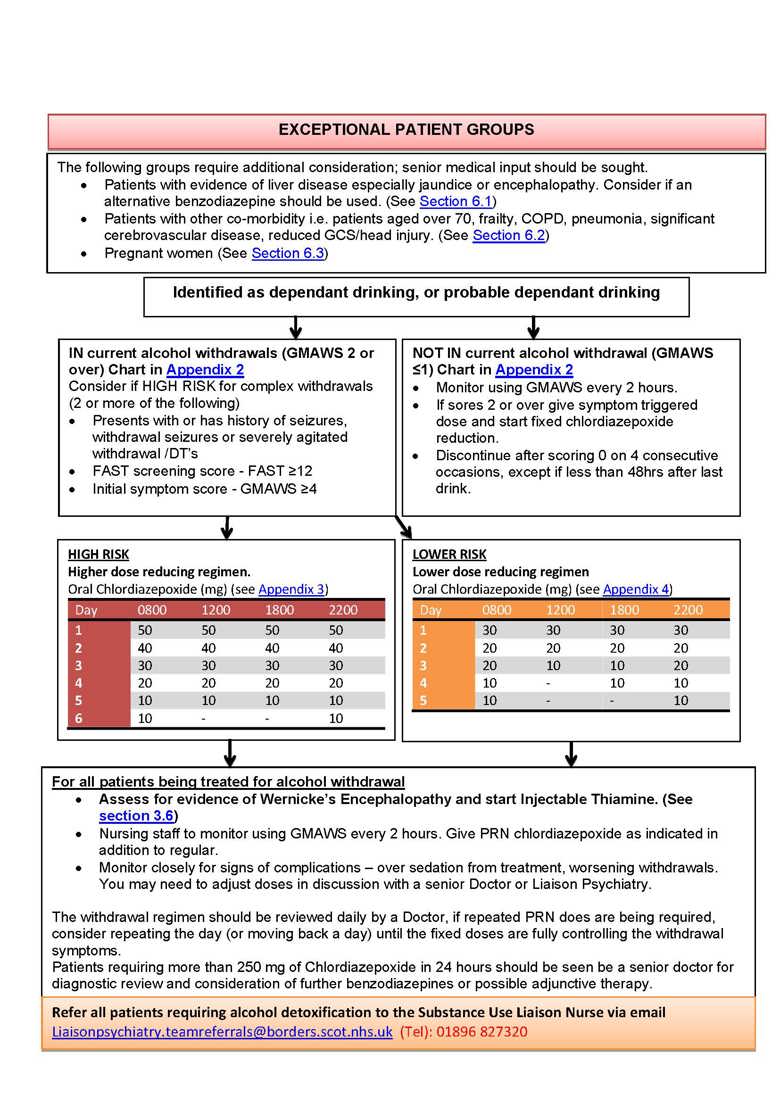
Patients are at a higher risk of experiencing more complex alcohol withdrawal if 2 or more of the following are met:

  • Presents with a history of seizures or has had previous withdrawal seizures or severely agitated withdrawal /DT’s
  • High screening score on FAST (FAST >12) Chart in Appendix 1
  • In withdrawals with high initial symptom score on GMAWS (GMAWS >4) Chart in Appendix 2

High risk patients must have their care plan discussed with a Senior clinician to make any changes or adjustments.

Assessment Summary / FAST Score

 Management Summary of Alcohol Withdrawal

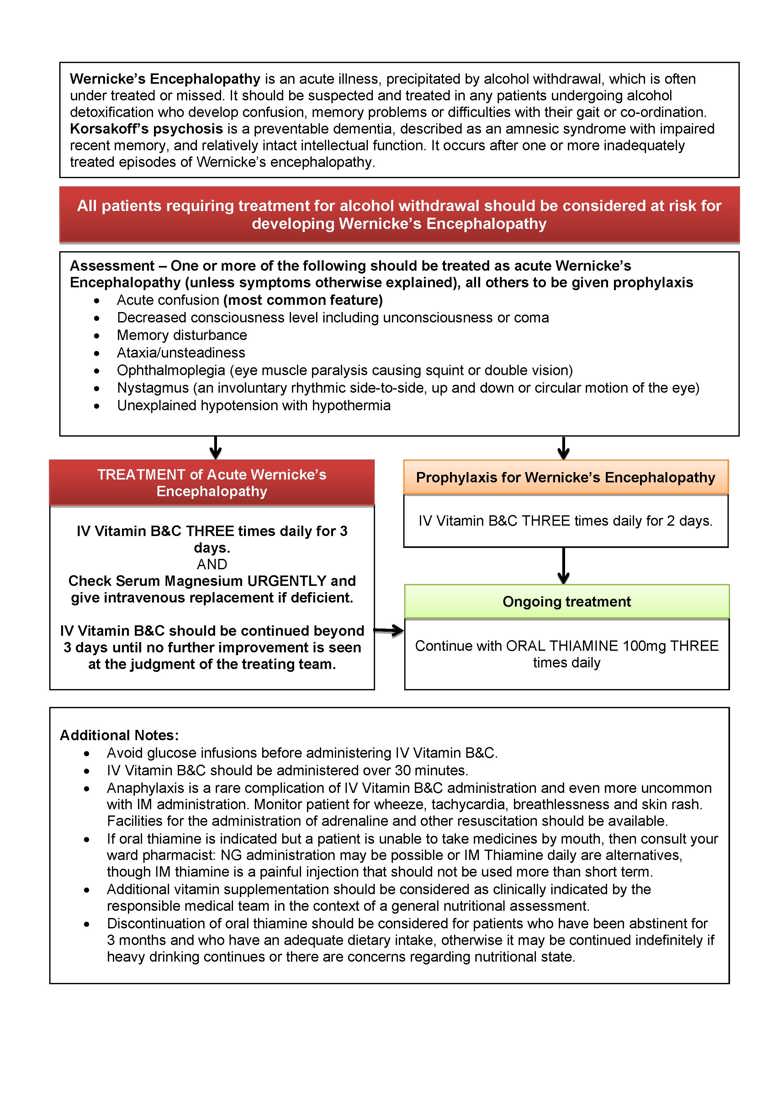
Prophylaxis and treatment of Wernicke-Korsakoff Syndrome Summary


Treatment

In medically assisted alcohol detoxification, the patient stops alcohol intake abruptly, its effects are replaced by a benzodiazepine that has cross-tolerance in a safe and structured manner. This can be reduced at a rate that prevents withdrawal symptoms, but without promoting over-sedation, and ultimately stopped altogether. The process involves providing a large enough initial dose to prevent severe withdrawal symptoms including seizures, delirium tremens (DT’s), severe anxiety or autonomic instability, but to withdraw the medication before physical dependence on its effects begins.

Evidence suggests that long-acting benzodiazepines (such as chlordiazepoxide) may be more effective than short-acting ones in preventing seizures and delirium and allow a smoother withdrawal with less rebound. However, there is risk of accumulation in those with impaired hepatic function and those with significant liver failure in whom short acting benzodiazepines that are not as reliant on hepatic metabolism should be considered.

Initial treatment/deciding when to give first dose

Initiation of treatment before significant withdrawal symptoms begin to emerge, results in better outcomes. Delay in initiating treatment can result in withdrawal symptoms either becoming difficult to control or the emergence of complications such as DT’s or seizures.

Caution should be taken around the use of benzodiazepine sedation while the patient is still intoxicated with alcohol as this can lead to respiratory depression with its complications and death itself. It is rarely useful to check alcohol levels as tolerance to the effects of alcohol can be variable and observations of respiratory rate, heart rate and oxygen saturation can provide more useful aid to decision making.

Therefore, clinical judgement needs to be used alongside the guidelines below:

  • Consider GMAWS score.
    • 2 or over – Likely to be in clinically significant withdrawals and for treatment to be needed.
    • 0 or 1 – Consider supportive care and observation, with treatment to commence if symptoms worsen (GMAWS 2 or over)
      • Monitoring this patient group by nursing staff at hourly intervals can prevent exposure to benzodiazepine detox unnecessarily.
    • The more severe the alcohol dependence, the earlier withdrawal symptoms emerge after the last alcohol intake.
    • Consider the possibility that patients may have consumed significant amounts of alcohol just prior to entering hospital and that their blood alcohol level might still increase if not all has yet been absorbed. Consideration should be given to ensuring assessment takes place after allowing for absorption of the last drink. After approximately 1 hour.
    • Some people who are severely alcohol dependent can experience significant withdrawal with a blood alcohol concentration of 100mg/100mL (BrAC 0.5mg/L) or more.
      • Medication may be required in these cases but use caution with dosages and always consult with senior doctors.
      • Anyone significantly withdrawing with a blood alcohol concentration of 100mg/100mL (BrAC 0.5mg/L) or over should be closely monitored as this is a risk factor for development of Delirium Tremens (DT’s).

For patients who are clinically in active alcohol withdrawals treatment should not be delayed until the next drug round. Initial doses of medication should be given according to GMAWS score and monitoring with GMAWS started.

Fixed reduction regimen

A fixed-dose regimen is preferred in NHS Borders as it is recognised that a fully symptom-triggered regimen may put patients at risk of being under-treated if the regimen is not followed closely. Full symptom triggered regimens require more regular observations and are only fully safe in environments that have facilities and staffing allowing for close monitoring.

Patients in alcohol withdrawal should be placed on a fixed reducing regimen of chlordiazepoxide. Assessment should be undertaken to consider if the patient is at higher or lower risk of developing significant complications of withdrawals. If admitted overnight use the when required dosing based on GMAWS scoring of symptoms in Appendix 2 until they can start fixed dosing the next morning otherwise the patient will miss treatment doses.

Higher Risk

Any patient with two or more of the following are considered to be Higher Risk

  • Presents with a history of seizures or has had previous withdrawal seizures or severely agitated withdrawal /DT’s
  • High FAST screening score (FAST >12)
  • High initial symptom score (GMAWS >4)

Patients assessed as higher risk should be started on a higher dose schedule. This should be reviewed at least daily by a senior doctor.

Higher dose reducing regimen

Oral Chlordiazepoxide (mg) (see Appendix 3)

Day 0800 1200 1800 2200
1 50 50 50 50
2 40 40 40 40
3 30 30 30 30
4 20 20 20 20
5 10 10 10 10
6 10 - - 10

Lower Risk

Patients in withdrawal without risk factors, as above, should be started on the lower dose schedule.

Lower dose reducing regimen

Oral Chlordiazepoxide (mg) (see Appendix 4)

Day 0800 1200 1800 2200
1 30 30 30 30
2 20 20 20 20
3 20 10 10 20
4 10 - 10 10
5 10 - - 10

Symptom triggered monitoring / GMAWS

Alongside the fixed reducing regimen all patients should be monitored using the Glasgow Modified Alcohol Withdrawal Scale (GMAWS) for withdrawal symptoms between fixed doses. (see Appendix 2)

Use of the GMAWS is designed to support nursing staff in assessment of withdrawal symptoms and guide dosing of medication. Increasing GMAWS scores despite symptom triggered and fixed medication doses should trigger further medical review.

GMAWS scoring should be done at least every 2 hours and continue for at least 48 hours after the patients last reports having drunk. Beyond this time, it can be stopped after the patient has scored 0 on at least 4 consecutive occasions.

If after the fixed reduction after scoring has been stopped the patient reports uncontrolled withdrawal symptoms, assess these using GMAWS. If the patient is scoring 1 or >1 and requires additional symptom triggered treatment this should prompt medical review of their detox regimen.

Dehydration and Electrolyte depletion

Dehydration and Electrolyte depletion are both possible in those who are withdrawing from prolonged alcohol binges. All patients should be assessed clinically and have U&E’s, magnesium and phosphate checked on bloods. Please see IV fluid guidelines for further information.

  • The degree of dehydration and electrolyte deficiency may be profound and require substantial replacement (particularly potassium, magnesium and phosphate).
  • Hypomagnesaemia is particularly significant and should be treated as it decreases seizure threshold, failure to replace magnesium may make treatment of hypokalaemia refractory and hypomagnesaemia reduces thiamine absorption.
  • Dehydration and volume depletion increases autonomic activity and contributes to the physiological challenge posed by alcohol withdrawal symptoms.
  • Sodium chloride 0.9% should be given initially to replace electrolytes and fluid.
  • Crystalloid fluids containing potassium at standard maintenance rates may be necessary if the patient is sedated and not ingesting normal fluid intake.
  • Fluids may need to be given at an accelerated rate initially depending on estimates of haemodynamic compromise, dehydration and serum electrolyte levels. Caution should be exercised where there is suspicion, or evidence of decompensation of liver or cardiac function.
  • Glucose 5% should be reserved until after haemodynamic stability is achieved and IV vitamin B+C is given.

Reviewing treatment

Patients having treatment for alcohol withdrawal should be reviewed daily. Where there is no evidence of over sedation or significant withdrawal the fixed reduction can generally continue.  

If the patient is continuing to experience withdrawal symptoms (scoring on GMAWS) and requiring multiple additional doses of medication over the fixed reduction then consideration should be given to repeating a day of the fixed reduction regimen, this should be at a lower threshold where the patient has been assessed as being at higher risk. Where a patient is scoring 4 or over on GMAWS the fixed regimen should not be reduced, and the day repeated until GMAWS is no longer 4 or over.

Patients fulfilling the following criteria should be reviewed by a Senior Doctor.

  • Alcohol blood level >100 mg/ml
  • Patients requiring higher dosing Chlordiazepoxide pathway
  • Complications (Seizures, DTs)
  • Pregnancy
  • Requiring greater than BNF doses of Chlordiazepoxide
  • Patients wishing to discharge prior to completing full detoxification pathway.

Complications of Alcohol withdrawal

Seizures

  • Alcohol withdrawal seizures generally occur between 6 to 48 hours after a significant reduction in alcohol.
  • Adequate doses of chlordiazepoxide for those in withdrawal usually prevent seizures.
  • A history of seizures increases the risk of further seizures during any subsequent episode of alcohol withdrawal.
    • Any patient with a history of seizures should be viewed as higher risk and considered for the higher dose Chlordiazepoxide reducing regimen.
  • For any patient who experiences a seizure and after resolution appears to be in clinically visible alcohol withdrawal consider giving a dose of a fast-acting benzodiazepine (e.g. Lorazepam 2mg oral or IV)
  • For any patient who experiences a seizure ensure that the chlordiazepoxide regimen is reviewed and if needed increased.
  • If seizing is prolonged (status epilepticus) seek senior medical advice and give lorazepam 4mg IV over 2mins OR Diazepam 10mg IV over 2mins. If the IV route is unavailable give Buccal midazolam 10mg OR rectal diazepam 10mg.

Delirium Tremens

Delirium tremens (DT’s) usually emerges between 48 and 72 (occasionally 96) hours of alcohol withdrawal in a severely alcohol dependent individual. This is a medical emergency, with a mortality rate of 15-20% if untreated.  Maintaining a high index of suspicion of the development of delirium tremens in those undergoing alcohol withdrawals is crucial.

Common symptoms include:

  • Increasing confusion, agitation and disorientation
  • Severe tremor
  • Hallucinations (auditory, olfactory and classically visual)
  • Delusional beliefs
  • Autonomic disturbance (tachycardia, hyperthermia, hypertension, tachypnoea)

Prevention of Delirium Tremens

Prevention of the onset of DTs is a key goal. Most cases of DTs can be prevented by more aggressive initial treatment with benzodiazepines. If a patient presents with any of the following or during routine observations is observed with the following, these will positively predict an increased risk of delirium tremens:

    1. Previous history severe withdrawal / delirium
    2. Tachycardia >100 bpm
    3. GMAWS ≥4 with breathalyser alcohol reading > 0.5mg/L
    4. Intercurrent infection e.g. chest infection / UTI
    5. Temperature >38.9c
    6. On an existing prescription of a regular sedative medication e.g. regular benzodiazepine

For patients with risk factors for developing DT’s record this on the NEWS chart and consider using the higher initial dose regimen of chlordiazepoxide and ensure close nursing monitoring using GMAS. Ensure magnesium level is checked and replacement commenced if low and correct any other electrolyte imbalances if required, especially hypokalaemia. Physical observations should be recorded on the NEWS chart.

Management of Delirium Tremens

All patients thought to be in DT’s should be discussed with a senior doctor. Delirium Tremens is a medical emergency and if patients deteriorate, they may require HDU/ITU care, there should be a low threshold for discussion with and transfer to the critical care, especially if there is any evidence of autonomic instability.

Medication

Management aims for the administration of adequate sedative doses of benzodiazepines. The goal is “front-loading”, administering higher initial doses of benzodiazepine to achieve more rapid control. The object of treatment is to make the patient calm and lightly sedated but easily rousable. There must be awareness of the risk of overdosing and over sedation, which must be carefully monitored. Doses above BNF limits (total 250mg/day Chlordiazepoxide) should trigger automatic senior review.

For patients who can take oral medication:

    • Chlordiazepoxide 50 mg up to every hour.

If no oral route:

    • Diazepam 10 mg IV.
      • Further 10 mg dose to be considered after 10 minutes if the patient remains agitated, with then ongoing hourly review.

If no IV access:

    • Consider Lorazepam 1 - 2 mg IM up to every hour.
    • Consider rectal Diazepam 20 mg up to every hour.

In a specialist clinical environment (HDU/ITU) there is no maximum dose of benzodiazepines in DTs which are titrated to achieve symptom control.

If there are prominent psychotic symptoms within the delirium:

    • Consider Haloperidol 1–5 mg 8 hourly, either oral or IM.
      • ECG should be checked before giving Haloperidol to ensure a normal QTc.
      • If no ECG, consideration should be given to cardiac factors and risk benefit balance.
      • Oral Olanzapine initially at 2.5mg is an alternative. IM Olanzapine should not be used as a 60-minute gap is needed between IM Olanzapine and a parenteral benzodiazepine.

    • Antipsychotics can lower the seizure threshold and they do not treat the underlying alcohol withdrawal syndrome, they should not be used instead of adequate doses of benzodiazepines, but only alongside them.

Additional measures

    1. Manage in well-lit quiet room with reorientation chart and infrequent nursing changes (often requires 1:1 nursing).
      1. Expert nursing care is a crucial element of safe management of delirium tremens.
    2. Regular physical observations, may initially need hourly
    3. Daily bloods for U&Es, Mg2+, blood glucose, LFT’s and FBC.
    4. Maintain fluid balance chart, aim for fluid intake of 3L/day. The risk of dehydration and electrolyte disturbance is high.
    5. Regular physical review to monitor for other emerging causes of confusion e.g. infection.
    6. Treat every patient as incipient Wernicke’s – Give full treatment doses of IV Vitamin B&C for at least 3 days but may require longer if remains symptomatic. Discuss with senior clinician.

Capacity and Legal status

    • Patients in DT’s may lose capacity to consent to medical treatment and assessment and consideration should be given to the use of a Certificate of Incapacity under Section 47 of the Adults with Incapacity (Scotland) Act 2000.
    • If patients refuse to allow treatment, requiring physical measures to administer it, or are actively seeking to leave, then they should be assessed to consider if detention under the Mental Health (Care and Treatment) (Scotland) Act 2003 is appropriate.
    • Input should be sought from Liaison Psychiatry if needed.

Wernicke-Korsakoff Syndrome

Inappropriately managed Wernicke’s encephalopathy (WE) carries a significant mortality rate and can result in permanent brain damage (Korsakoff’s psychosis) in 85% of survivors. The classical triad of signs (acute confusion, ataxia and ophthalmoplegia) only occurs in around 10% of patients. Therefore, the triad cannot be used as the basis of diagnosis and a high index of suspicion is needed.

Wernicke’s encephalopathy is reversible in the early stages with rapid restoration of CNS B-vitamins (in particular thiamine) and treatment doses of IV Vitamin B&C should be initiated immediately a diagnosis is suspected. All patients being treated for alcohol withdrawal should be assessed for and either treated for WE or given prophylaxis as per this guidelines under assessment (Prophylaxis and treatment of Wernicke-Korsakoff Syndrome Summary)

If no IV access is possible thiamine can be given intramuscularly in exceptional circumstances – this should be attempted most especially if WE is suspected. 

  • IM Thiamine is a large volume injection and is an extremely painful IM injection.
  • Under these circumstances it may only be possible to give ONE IM injection at a time and this dose repeated as often as the patient will tolerate.
  • It should be reverted to intravenous Vitamin B&C therapy as soon as possible.

6 Exceptional Patient Groups

Liver disease

The metabolism of Chlordiazepoxide is impaired in significant liver disease, risking accumulation and toxicity. LFTs should be monitored throughout treatment and nursing observations should be recorded on the NEWS chart. Where there is previously diagnosed chronic liver disease or cirrhosis or where at assessment there is evidence of significant liver impairment,

  • Clinical - jaundice, ascites, hepatic encephalopathy, spider naevi, palmar erythema, hepatomegaly, or other clinical stigmata of cirrhosis
  • Biochemical - ↑ Serum bilirubin, ↓ albumin, ↑ prothrombin time.

Consideration should be given to patients:

  • In moderate liver impairment -Consider reduction of the Chlordiazepoxide fixed regimen - starting on day 2 (20mg QDS) of the lower risk regimen, with strict GMAWS monitoring and increased monitoring for toxicity, extending the detox if 4 days is not adequate.
  • In severe liver impairment –Consider use of Oxazepam as an alternative benzodiazepine.
    • Oxazepam has a shorter half-life and is less reliant on hepatic metabolism so is less prone to accumulation and toxicity.
    • Oxazepam doses can be seen as approximately equivalent to chlordiazepoxide.
    • The shorter half-life of Oxazepam necessitates more frequent monitoring, with a greater risk of breakthrough withdrawals and seizures between doses.
    • Consider using a fully symptom triggered approach for this patient group to reduce their exposure to benzodiazepines – Only if there are adequate nursing resources as determined by the ward safe staffing risk matrix. Use the following doses with GMAWS
      • Score 1-3 = Oxazepam 20mg
      • Score 4 – 8 = Oxazepam 30mg
      • Score 9 – 10 = Oxazepam 50mg
    • If there is not adequate nursing resource to confidently use a full symptom triggered detox, consider using fixed regimen in Appendix 5 with additional GMAWS monitoring.

Older adults or other physical comorbidities

For those over the age of 70, or those with frailty or other comorbidities such as COPD, pneumonia, significant cerebrovascular disease, reduced GCS / head injury - consider similar measures to those with liver impairment, using a more cautious Chlordiazepoxide regimen (discuss with senior clinician) or Oxazepam if there are concerns around benzodiazepine accumulation.

Pregnancy

Where a woman is drinking dependently during pregnancy there is significant risk of the baby developing a Fetal Alcohol Spectrum Disorders (FASD), these encompass a continuum of adverse physical and neurodevelopmental outcomes that have been observed following prenatal alcohol exposure. At the most severe end of the spectrum sits Fetal Alcohol Syndrome (FAS), this is most often associated with higher (>5 units/day) alcohol consumption during pregnancy.

Alcohol is significantly more teratogenic than a 5-10 day course of benzodiazepines. It is accepted practice that any pregnant woman admitted to hospital with active symptoms of withdrawal be commenced on the standard chlordiazepoxide regimen to medically manage alcohol withdrawal together with IV Vitamin B&C.

Pregnant women should be reviewed as soon as practically possible by a senior doctor, should have their obstetric team alerted to their admission and should be referred to the substance use liaison nurse for to ensure follow up plans can be considered.

Note regarding Chlordiazepoxide in pregnancy:

At the time of guideline review (Sept 2024) the Summary of Product Characteristics (SPC) https://www.medicines.org.uk/emc/product/1728/smpc#gref from the manufacturer of Librium® (Mylan/Viatris) advises that

“Contraception in males and females:

Due to the genotoxic potential of Chlordiazepoxide (see section 5.3), women of childbearing potential should use effective contraceptive measures while being treated with Librium and for 7 months following completion of treatment.

If the patient suspects to be pregnant or intends to become pregnant, she should be warned to contact her physician to discuss discontinuation of Librium.

Men are recommended to use effective contraceptive measures and to not father a child while receiving Librium and for 4 months following completion of treatment.”

Chlordiazepoxide has for a long time been used in the UK as a standard treatment for pregnant women requiring alcohol detoxification. The current position statement (last checked Sept 2024) from the UK Teratology Information Service (UKTIS) following the changes made to the Librium SPC in May 2022 ids that they were made without any new evidence having been published and that that the “mutagenic potential for alternative benzodiazepines (Diazepam, Lorazepam and Oxazepam) is unknown”.  They concluded that,

  • “The available data suggesting mutagenic effects of chlordiazepoxide are not conclusive, and as such, the recommendations from the manufacturer are considered overly cautious, particularly when reflecting on the benefits of treating alcohol dependency and the risks from delirium tremens and seizures if chlordiazepoxide is withheld.
  • Clinicians should not be discouraged from using chlordiazepoxide based on this evidence.
  • The benefits of treating pregnant women (at any stage of pregnancy) experiencing acute alcohol withdrawal with chlordiazepoxide likely outweigh the risks.”

UKTIS (UK teratology information service) current advice can be found here - Re: Update to the Librium® Summary of Product Characteristics (20th May 2022) Link to UKTIS Position Statement

Guidance around discharge

All discharged patients should receive 14 days prescription of oral thiamine and any relapse prevention medication on discharge with advice to contact their GP for continuation.

Discharge planning

Where patients have required admission to hospital and are then needing to undergo alcohol detoxification decisions on when to discharge require careful thought. The guidance below aims to address common scenarios. Support should be sought from the Substance Use Liaison Nurse or Liaison Psychiatry if needed. 

All patients should receive 14 days prescription of oral thiamine and any relapse prevention medication on discharge with advice to contact their GP for continuation.

Self-Discharge

No take home medication to complete detox should be given if a patient chooses to self-discharge.  

Where a patient still undergoing detox wishes to self-discharge their capacity under their capacity to make this decision under the Adults with Incapacity (Scotland) Act 2000 needs to be considered.

Patients who are experiencing complex withdrawals such as DT’s or Wernicke’s may have lost capacity to make decisions relating to their care and treatment and consideration should be given to if measures under the Adults with Incapacity (Scotland) Act 2000 and Mental Health (Care and Treatment) (Scotland) Act 2003 are needed. Advice should be sought from Liaison Psychiatry in hours, or the Crisis team out of hours as needed.

If a patient is judged to have capacity details of this assessment should be clearly documented alongside details of the risks that have been explained to them around leaving hospital.

Non-Compliance with Detox (continuing to access alcohol in hospital)

Despite our best efforts some patients may continue to access alcohol whilst receiving alcohol detox. This represents a significant risk due to the mixing of benzodiazepines and alcohol.

If medically fit other than completing alcohol detox:

    • Assess patient capacity, document accordingly.
      • If lacks capacity, consider if compulsory measures to stop access to alcohol are needed / appropriate – seek support from Liaison Psychiatry
      • If has capacity then continue as below,

    • Ensure no complex symptoms present – i.e. DT’s, Wernicke’s
    • Reinforce to patient that combining alcohol with detox medication is harmful and could result in death. Document accordingly.
    • Discharge without take home detox medications.
    • Document patient has been referred to community alcohol team With You.
    • Document patient given advice that - acute withdrawal MAY occur and COULD result in seizure IF alcohol ceased abruptly, advise them to continue drinking alcohol AND reduce intake slowly.

Where the patient is medically unfit for discharge:

    • Assess capacity, document accordingly.
      • If lacks capacity, consider if compulsory measures to stop access to alcohol are needed / appropriate – seek support from Liaison Psychiatry
      • If has capacity, then continue as below – seek support from Liaison Psychiatry to seek to negotiate terms of remaining in hospital.

    • Inform patient that combining alcohol with detox medication is harmful and could result in death. Document accordingly.
    • Seek to reach an agreement with the patient around remaining in hospital without accessing alcohol.
    • If continues to access alcohol and is not safe to discharge:
      • Discontinue fixed reduction of benzodiazepine.
      • Continue (or restart) GMAWS scoring, only give benzodiazepines if withdrawal symptoms present.
      • Continue vitamin supplementation i.e. Injectable Thiamine / oral Thiamine.

Patients who do not wish to stop drinking after discharge.

Patients may be clear that even if they require detox medication whist in hospital, they do not wish to alter their drinking after discharge.

If detox is completed before planned medical discharge, ensure that the patient has been referred to the Substance Use Liaison Nurse to discuss harm reduction and onwards care. If not available ensure the patient has been referred to With You for further support in the community, unless this is declined.

If detox is not complete but a patient is otherwise medically fit, then the risks of ongoing drinking should be discussed. If possible, they should be seen before discharge by the Substance Use Liaison Nurse, if not then they should be referred to With You for further support, unless this is declined. They should be given advice around not stopping drinking abruptly and if clear that they intend to continue to drink then detox should be stopped, and they should be discharged. No take home medication to complete detox should be given if a patient is clear they intend to continue drinking after discharge.

Patients who are otherwise medically fit, but detox is not complete

Where patients are otherwise medically fit, intending to not drink, but have not completed their detox careful consideration should be given to if they are able to complete the last stages of the detox at home.

The highest risk period where complications (DT’s/seizures) are most likely to emerge is generally the first 72 hours (96 in especially heavy drinkers – those who have used the “high risk” detox schedule should all be seen in this group). Patients moving outside of this period could be considered for completion of the detox outside of hospital. The decision should be taken as a shared decision with the patient and after consideration of the clinical risk. It should not be influenced by external factors, such as hospital bed pressures.

Patients being discharged to complete detox at home should have had the opportunity to be assessed by the Substance Use Liaison Nurse to ensure that consideration has been given to follow up and support with relapse prevention.  

The following factors should be considered as part of an individual risk assessment.

Lower risk Higher risk (recommend continuing in hospital)
Experienced only simple withdrawals during detox – sweats, tremors, anxiety Experienced complex withdrawals during detox – hallucinations / delusions, DT’s, seizure, Wernicke’s

Outside of first 72 hours of detox (low risk schedule)

Outside of first 96 hours of detox (high risk schedule)

Within first 72 hours of detox (low risk schedule)

Within first 96 hours of detox (high risk schedule)

Not symptomatically scoring and GMAWS able to be stopped Scoring on GMAWS and needing PRN benzodiazepines
Stable mental health, no suicidality  Unstable mental health, suicidal thoughts, admission was following self-harm
Supported – non drinking others who are willing to act as supporters will be at home with them Not supported - living alone, No Fixed Abode, others at home using alcohol
Not planning to drink alcohol Unsure if they wish to drink – risk of mixing alcohol with benzodiazepine

If discharged to complete detox only the remaining number of chlordiazepoxide capsules should be given to complete the fixed schedule. No PRN doses should be given.

Patient can be given advice to contact local alcohol services or GP regarding further support after discharge.

Development/Review Groups

2011 Development Group  
Dr Mike Kehoe - Consultant Psychiatrist
Dr Chris Evans - Consultant Physician
Dr Cliff Sharp - Consultant Psychiatrist
2019 Review Group
Dr Mike Kehoe - Consultant Psychiatrist
Dr Chris Evans - Consultant Physician
Dr Cliff Sharp - Consultant Psychiatrist
Suzy Asquith - Liaison Nurse
Liz Leitch - Formulary Pharmacist
Kyna Platts - Mental Health Pharmacist
2024 Review Group - Complete re-write to include GMAWS
Dr James Tidder - Consultant Psychiatrist Dr Lynn McCallum
Dr Niall Campbell – Consultant Liaison Psychiatrist Dr Balakumar Muthukrishnan - Consultant Physician
Dr Chris Evans- Consultant Physician Dr Rachel Williams - Consultant Physician
Dr Jonathan Manning- Consultant Physician Dr Hosni El-Taweel- Consultant Physician
Dr Jonathan Fletcher- Consultant Physician Dr Tom McKay- Consultant Physician
Dr Megan Hume – Locum Consultant Dr Eva Palik- Consultant Physician
Dr Sunny Jabal - Consultant Physician Dr Laura Ryan - Strategic Lead
Dr Favas Perinkadakatt – Specialty Doctor CAMHS Dr Barry Rodgers - Consultant Physician
Elaine Dickson – AdoN Acute Services Dr Michael Ross - GPST1
Jane Jones – Charge Nurse Craig Whitehead ANP
Lana Ker – Addictions Nurse Fiona Bennie – BAS Team Manager
Rhona Morrison – QIF, Medicines Governance & Non-Medical Prescribing Lead Ségdae Richardson-Read - Advanced Clinical Pharmacist
Andrew Crawford Specialist - Clinical Pharmacist Dr Rosemary Gordon – Consultant Addictions Psychiatrist
Adrian Mackenzie – Clinical Pharmacist  

Appendix 1 - FAST Screening Tool

Appendix 2 Glasgow Modified Alcohol Withdrawal Scale (GMAWS)

Appendix 3 - Chlordiazepoxide Fixed Reducing Dose Chart: (High Risk)

Appendix 4 - Chlordiazepoxide Fixed Reducing Dose Chart: (Lower Risk)

Appendix 5 - Oxazepam Reducing Dose Chart

Editorial Information

Last reviewed: 31/01/2025

Next review date: 31/01/2027

Author(s): Kehoe M, Evans C, Sharp C.

Version: V8

Approved By: ADTC

Reviewer name(s): Campbell N.